New from Altus: our 2025 product release wrap
Managing portfolios, projects, and resources has never been more complex. Teams are under pressure to deliver more, adapt faster, and prove value, often with limited visibility and disconnected tools.
In 2025, Altus focused on solving these real-world challenges. Everything we delivered was designed to help you make clearer decisions, reduce manual effort, and stay aligned to what matters most. Here is how those improvements translate into everyday value for our customers, along with a look at what is coming next.
A leap forward in Strategic Portfolio Management
One of the biggest challenges organisations face is knowing whether they are investing in the right work.
Altus Strategic Portfolio Management helps you clearly see how initiatives, projects, proposals, and ideas align to your strategic goals. Instead of relying on instinct or internal influence, you can prioritise work based on value, impact, and alignment.
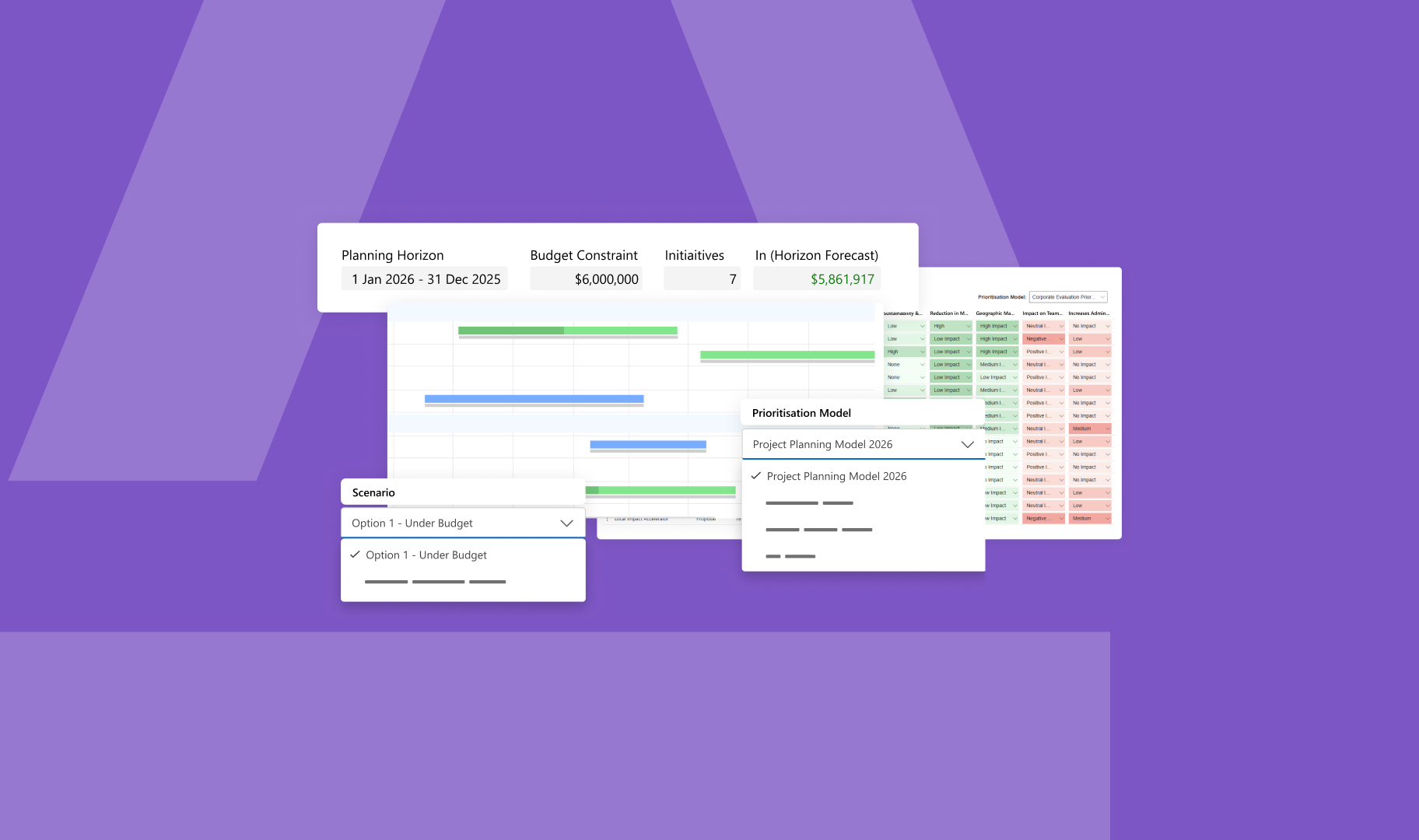
When priorities change, which they always do, strategic optimisation allows you to model different scenarios and understand the impact on budgets, resources, and delivery timelines. This makes it easier to have informed conversations with leaders and stakeholders, and to adapt without losing sight of your strategy.
Understand your portfolio at a glance
Trying to understand the state of delivery by scrolling through long lists of projects is time-consuming and frustrating.
The new timeline view in Altus gives you a clear picture of all active projects across portfolios and programmes in one place. You can quickly see what is on track, what is at risk, and how work is connected.
With inter-project dependencies now visible, you can identify potential flow-on impacts early and address issues before they escalate. This helps teams move from reactive problem-solving to proactive planning.
Plan resources with less effort and fewer surprises
Resource planning is often one of the most difficult and time-consuming parts of portfolio management.
Altus now automatically connects project schedules to resource plans, keeping everything in sync without manual updates. Whether you plan in days or hours, you can trust that what you are seeing reflects current delivery plans.
For customers, this means fewer surprises, more realistic plans, and far less time spent maintaining spreadsheets outside the system.
Provide even more value through insights
Reporting should support better decisions, not create more work.
In 2025, we introduced new Power BI dashboards that provide clear visibility into portfolio health, project performance, and prioritisation effectiveness. These dashboards are designed for PMOs, project managers, and leaders who need answers quickly.
Rather than overwhelming you with raw data, Altus reporting focuses on insights that help you take action, faster and more securely, without needing specialist reporting skills.
Secure, Copilot enabled AI that fits your workflow and organisational policies
Many teams spend too much time on administrative tasks that add little value.
Altus Copilot is designed to reduce that burden. Built directly into your day-to-day work, it helps you write clearer status updates, identify risks earlier, and complete forms faster.
Because Altus leverages Microsoft Copilot, your data remains secure and governed within your Microsoft environment. You stay in control, while Copilot helps remove the repetitive work that slows teams down.
Start each day with clarity
Knowing where to focus should not require digging through multiple screens.
The new Altus home page gives you an immediate view of what is due, what is overdue, and where your attention is needed next. It provides a clear starting point every time you log in, helping you prioritise your day with confidence.
Keep project documents in sync automatically
Keeping project documents aligned with system data is a common pain point for both project managers and PMOs.
Altus for Word templates remove this friction by connecting documents directly to your Altus data. Documents stay up to date automatically, without copying, pasting, or double-handling information.
For project managers, this means less time formatting documents and more time focused on delivery. For PMOs, it ensures consistency and a single source of truth, without needing to police document standards.
Faster, easier task scheduling
We also improved the usability and performance of the Altus Task Scheduler.
Inline editing and user experience enhancements make it quicker to update tasks, while performance improvements reduce delays when working with external schedules such as Microsoft Project and Microsoft Planner Premium. This means information appears in Altus faster and is ready for reporting sooner.
What's coming in 2026 from Altus
Looking ahead, 2026 will continue this focus on reducing friction and improving decision-making.
We are working on more flexible status updates so teams can track what matters most for different types of projects. Performance improvements in Altus for Project will support larger and more complex schedules. Time-phased effort and resourcing will provide a more realistic view of workload and capacity.
We are also enhancing project templating, top-down budgeting, and the Resource Heatmap and Demand experience, giving you clearer control and better visibility across your portfolio.
Help us shape the future of project portfolio management
2025 was a significant year for Altus, driven by real customer challenges and feedback. As we move into 2026, that partnership continues to shape where we go next.
If you would like to learn more about any of these capabilities, or how they apply to your organisation, please speak with your Altus representative or certified Altus partner.
Ready to unlock project success?
Schedule a demo to find out more about how Altus can help your organisation unlock project management success and reach your strategic goals.