
For many organisations, resource management is where plans either come together or start to fall apart. When information is spread across multiple screens, or requires manual work to keep up to date, it becomes harder to make confident decisions.
The April 2026 Altus release focuses on simplifying this experience. These updates are designed to bring resource planning into a single view, make allocation faster, and improve the quality of the data teams rely on every day.
Manage resource demand in one place
Resource planning often involves switching between different views to understand proposed work, committed work, and team capacity.
Altus now brings proposed and committed demand together in a single view. This allows central resourcing teams to review, adjust, and confirm allocations without losing context.
For customers, this reduces the need for hand-offs between teams and makes decision-making faster and more consistent. It also creates a smoother workflow by keeping all relevant information in one place.
Assign resources without breaking your flow
Allocating people to projects can sometimes involve multiple steps or moving between screens, which slows down the process and increases the chance of errors.
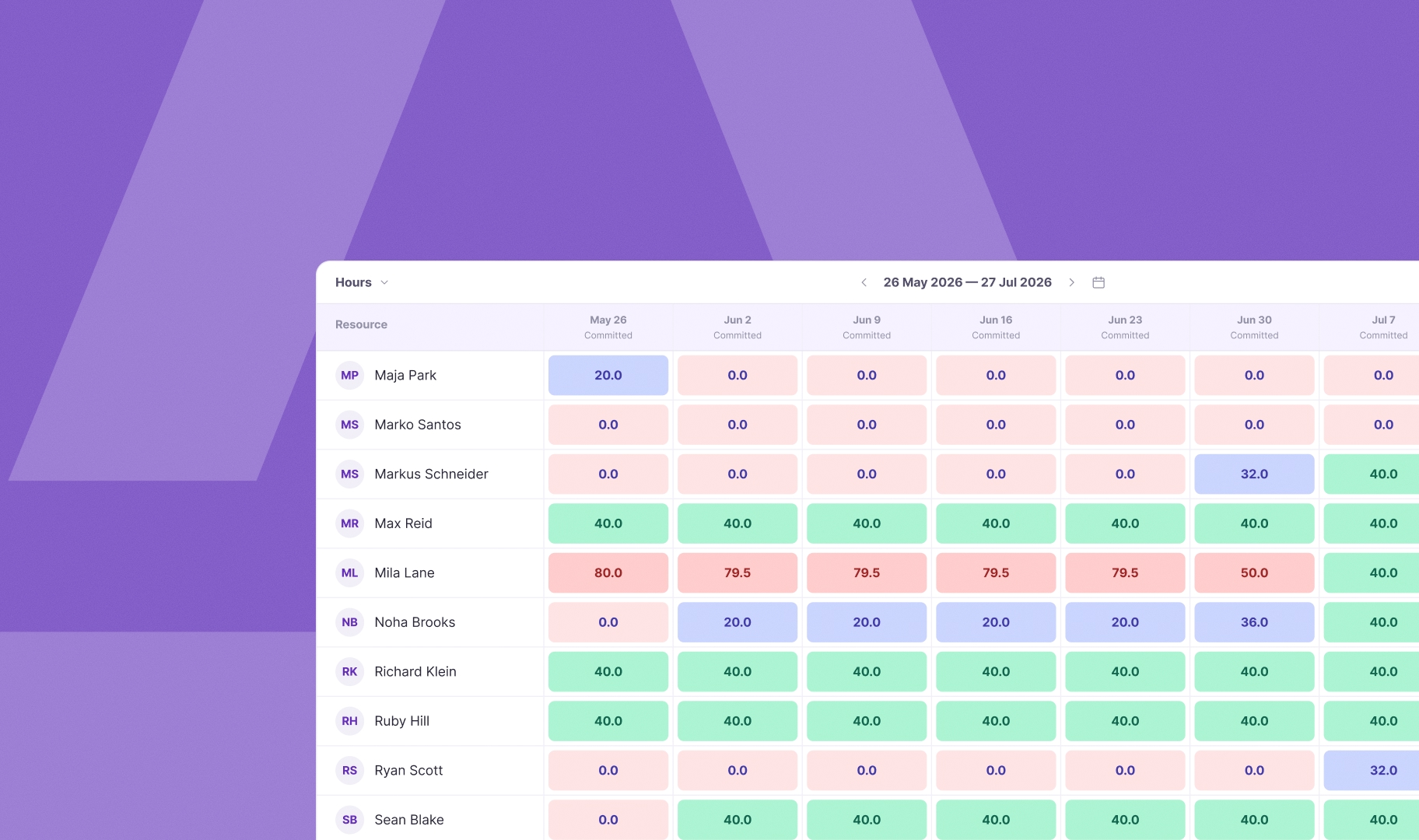
Altus now allows resources to be assigned directly from the heatmap. This means you can make allocation decisions immediately, at the point where you are reviewing capacity and demand.
The benefit is simple. Resourcing becomes quicker, more responsive, and easier to manage in real time.
Focus on the work that matters
When portfolios grow, it becomes harder to isolate the projects or initiatives that need attention.
Altus now allows you to filter resource views by specific projects or groups of work. This makes it easier to focus on the areas that matter most at any given time, rather than working through a broad, unfocused view.
For customers, this supports more targeted planning and clearer conversations about priorities and constraints.
Capacity insights that reflect your organisation
Different organisations define capacity and utilisation in different ways. A standard set of thresholds does not always reflect how teams actually work.
Altus now allows you to configure heatmap colour thresholds to match your own definitions of capacity. This ensures that the insights you see align with your operating model, rather than a generic baseline.
The result is more relevant information and better decision-making based on how your organisation runs.
A clearer view for resource managers
The April release also introduces an improved Power BI dashboard designed specifically for resource management.
This dashboard brings together key information on utilisation, workload, and changing demand over time. It allows teams to identify where capacity is becoming stretched, where there is available bandwidth, and how future demand is likely to evolve.
For resource managers, this supports a shift from reactive adjustments to more proactive planning. Potential issues can be identified earlier, and work can be balanced before problems impact delivery.
Improving the quality of timesheet data
Accurate time tracking is critical for reporting, forecasting, and understanding project performance. However, mistakes can occur when time is logged against tasks that should no longer be updated.
Altus now provides stronger controls around locked tasks. If time has been entered against a task that is no longer editable, users are guided to correct those entries before submitting their timesheet.
This prevents incorrect data from being submitted and improves overall data quality without requiring additional manual oversight from managers or PMOs.
Building a more efficient planning experience
The April 2026 release continues a clear direction for Altus. It focuses on reducing friction in everyday workflows, improving visibility, and helping teams make better decisions with less effort.
By bringing resource demand into a single view, enabling faster allocation, improving visibility through dashboards, and strengthening data quality controls, these updates support more confident and effective delivery.
Staying connected
Customer and partner feedback continues to shape how Altus evolves. To learn more about these updates, explore the roadmap on the Altus website or speak with your Altus representative or certified Altus partner.