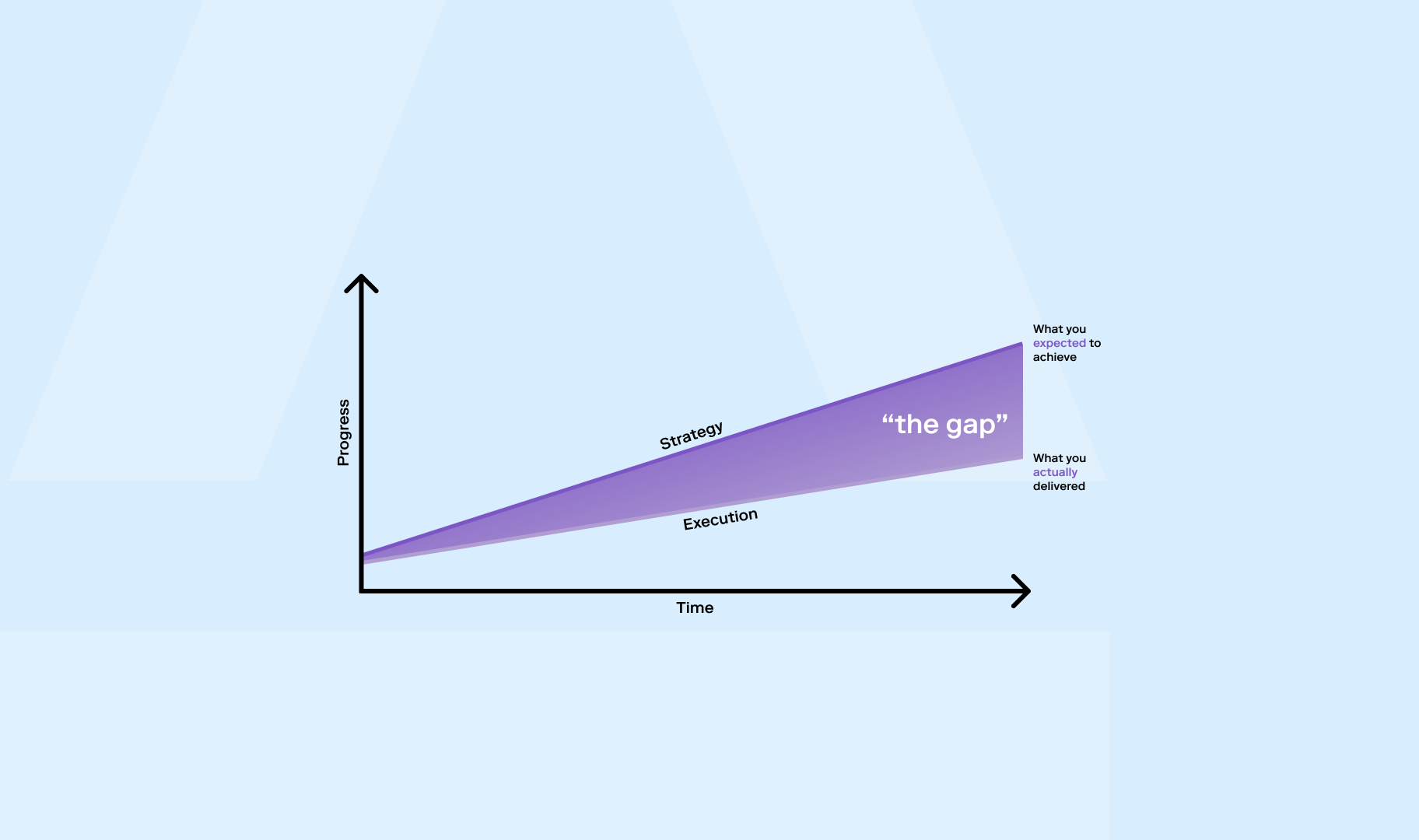
How to use PPM software for strategic planning: bridge the strategy-execution gap
Leadership has approved your strategic priorities. You've ranked your initiatives. Everyone agrees on what's important.
And yet, here you are at 11pm, rebuilding spreadsheets because the budget just got cut by 15%. The carefully prioritised list that made perfect sense last month suddenly doesn't fit the new reality, and you're scrambling to figure out which initiatives to pause, which to accelerate, and how to explain the trade-offs to stakeholders who want answers tomorrow morning.
This isn't a planning failure - it's business reality.
Strategic planning assumes a single, predictable future. But in reality, businesses must navigate multiple possible futures, and that gap is where most portfolio plans break down.
The hidden cost of single-scenario planning
Most organisations invest significant effort in identifying priorities and building detailed plans. This work is valuable, but it only answers one question: "What should we do if everything goes according to plan?"
The problem is that everything rarely goes according to plan.
When budget constraints shift or market conditions change - which happens constantly - the carefully constructed priority list becomes a starting point for manual negotiation rather than a decision tool. Often one can get stuck in the spreadsheet trap: rebuilding financial models, recalculating allocations, and manually testing combinations of initiatives to find a feasible plan that still delivers value inspite of the market changes or evolving constraint
When this happens, we hear this consistently: "We don't know what initiatives we should start or stop when priorities shift." The issue isn't about the lack of strategic clarity , it is about working with the unexpected changes and then translating that into executable possibilities for alignment. That exercise is often manual, labour intensive and error-prone because much of data sit across different areas – with business units, in different emails, local storage drives
The result? Decisions get delayed. Analysis gets simplified. Teams either overcommit (hoping constraints will loosen) or under commit (protecting against worst-case scenarios). This mis-alignment of execution to expectations are especially prevalent during changing times and this can often result in failure in achieving the strategic priorities
Why scenario planning changes the equation
Traditional portfolio planning assumes a single future—one set of priorities, one set of constraints, one path forward. Scenario planning breaks that assumption. It lets you model multiple plausible futures upfront, compare the trade offs, and understand which combinations of initiatives deliver the most value under different constraints. In PPM, this transforms planning from a static exercise into a dynamic capability. It is about being prepared for multiple futures with confidence and speed. When condition shift, you don’t rebuild spreadsheet from scratch. You simply select the scenario that reflects the new reality.
Example:
If your budget is suddenly cut by 15%, you don’t need to start searching the local storage drives for the previous version of the planning on spreadsheet, finding data buried in old emails trying to make sense out of them with the team and then having to manually enter the numbers on a spreadsheet to re score initiatives or recalculate allocations. Instead, you open the pre built 85% funding scenario. The optimal portfolio is already calculated, the resource capacity has been updated to-date the initiatives that fall below the threshold are clear, and the trade offs - impact, cost, timing - are quantified. You can adjust from there and move straight to decision-making, not coordinating for model rebuilding.
This speed creates real strategic advantage. Organisations that navigate change effectively aren’t the ones with the most polished annual plan - they’re the ones that can evaluate alternatives quickly and adjust with confidence when constraints shift.
Besides it being a great tool during contingencies Scenario planning also changes stakeholder alignment during the upfront planning phase. Present a single plan, and stakeholders debate whether it's "right." Present multiple scenarios with clear trade-offs, and the conversation shifts to which scenario best matches current conditions and risk tolerance. The trade-offs become visible and discussable before you're forced to make them under pressure.
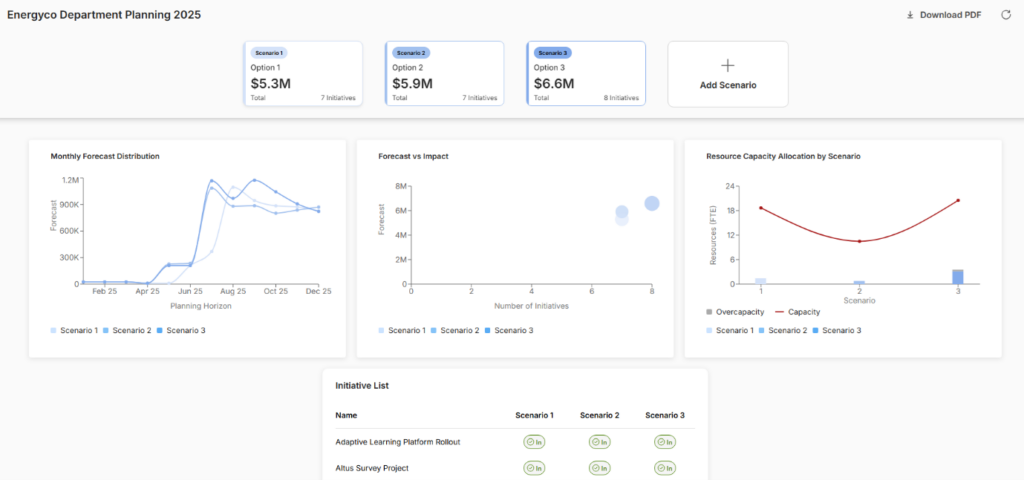
Most importantly, good scenario planning isn't about doing more with less - it's about being deliberate about which "less" delivers the most strategic value. Resource constraints and encountering unexpected changes are part of the reality. The question isn't whether you'll face them, but whether you'll have a methodical way to optimise within them or resort to across-the-board cuts that ignore strategic priorities.
What "good" scenario planning actually looks like
Effective scenario planning has several critical characteristics that distinguish it from simply creating multiple spreadsheet versions.
It must be quantifiable - In a quantifiable model, each initiative carries a consistent value score (e.g., impact on KPIs, contribution to strategic objectives, expected revenue) that remains constant across all scenarios. When you test a scenario - say, a 10% resource reduction or an accelerated delivery target - the system calculates which combination of initiatives maximises total strategic value, rather than simply showing which ones “fit.” This is what distinguishes true scenario planning from versioning spreadsheets: trade offs aren’t subjective; they’re numerically and visually comparable.
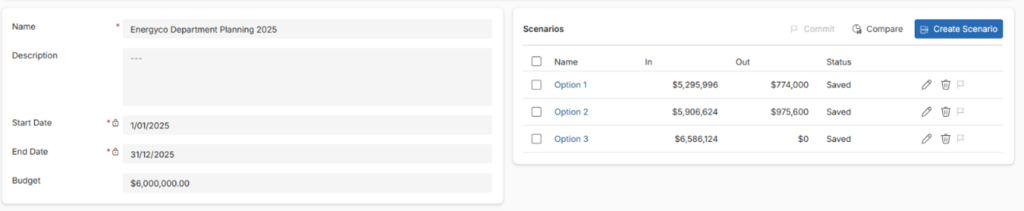
It must be fast. If creating scenarios takes days of spreadsheet work, you'll only do it when needed to, making decisions under pressure rather than with thoughtful analysis. Good scenario planning should generate and compare alternatives in minutes, changing it from an occasional exercise to a regular strategic practice.
It must be transparent. Stakeholders need to understand not just what the recommended portfolio is, but why - what assumptions drive it, what gets included or excluded, what trade-offs are being made. Clear logic enables productive conversations about whether those trade-offs align with strategic priorities.
Finally, it must be actionable- connecting directly to executable plans that portfolio managers can actually implement and track.
When scenario planning proves critical
We see scenario planning prove essential in three common situations.
Early-stage planning when priorities aren't fully set. It's budget season, and you have business ideas, inflight projects, and carryovers, but formal prioritisation isn't complete. Leadership wants to see options and trade-offs, but that is hard when there isn’t a standard way of reviewing those options. Currently this can come in the form of data being modelled on different spreadsheets by different teams who must spend time coordinating the analysis. This then become a costly exercise
Scenario planning using a platform like Altus lets you surface this information in a consistent manner and allows you to pressure-test different portfolio options with a visual comparison of trade-off before priorities are locked in- showing what you can realistically deliver under different assumptions and helping stakeholders make informed decisions about priorities and resource allocation together.
Translating priorities into executable plans. You've aligned initiatives with strategy and ranked them by value. Now you need to figure out which mix you can actually execute given budget and time limitations. Simply walking down the priority list and drawing a line where resources run out is not the best way – because - a lower-priority initiative might fit perfectly in remaining capacity while a higher-priority one requires resources you don't have. This is what scenario planning using a system instead of a spreadsheet – it allows you to visualise the remaining capacity and gap so that you can maximise value with those parameters.
For example: Think of a portfolio where your top ranked initiatives are all valuable, but they aren’t equally feasible under changing constraints. For instance, Initiative A might be ranked higher because it delivers strong long term strategic impact - but it requires a specialist role that’s already operating at 120% capacity. Initiative B, ranked slightly lower, fits perfectly into the remaining budget and available roles and delivers meaningful near term value. In a simple priority list approach, Initiative A would be chosen first even though executing it would immediately create bottlenecks and delay downstream work.
Scenario planning solves this by evaluating the total strategic value of the entire portfolio configuration, not just individual rankings. When you test scenarios - say, a 15% budget reduction or reduced availability of a critical resource - the model identifies combinations of initiatives that together maximise value while staying within real financial and resource limits. That might mean selecting Initiative B and C together because their combined value exceeds what you can realistically deliver with A alone under current constraints. Instead of leaving value on the table, you choose the portfolio mix that generates the highest return within what the organisation can actually execute.
When unexpected disruptions hit. This is the moment when scenario planning also becomes indispensable. A hiring freeze, a sudden budget clampdown, a critical resource becoming unavailable, a regulatory change, or a major dependency slipping can all force rapid portfolio adjustments. In these moments, teams without scenarios scramble to rebuild new models under pressure, often defaulting to opinions that may not always be practicable. This is where scenario planning can provide the contingency pathways before the shock arrives. With pre-modelled scenarios saved in a system for easy access that has already taken into account reduced capacity, delayed start dates, alternate delivery phasing – you can instantly shift to the portfolio configuration that best fits the new reality. Instead of firefighting, you’re already executing a plan that has been stress-tested and accessible to all stakeholders instead of working through spreadsheets and data that lived in emails and local storage drives.
PPM technology as the enabler for strategic PMO
For most organisations, the biggest barrier to effective scenario planning hasn’t been strategic capability - it’s been the tools. Most organisations are using spreadsheets to conduct their planning. However, spreadsheets simply weren’t built to model different portfolio combinations, apply consistent value logic, or recalculate scenarios instantly. Every change in budget, capacity, or timing required hours of manual updates, version hopping, broken formulas, and offline files that only one person could safely edit. The result? Teams avoided scenario planning except in emergencies, because it was too slow and clunky
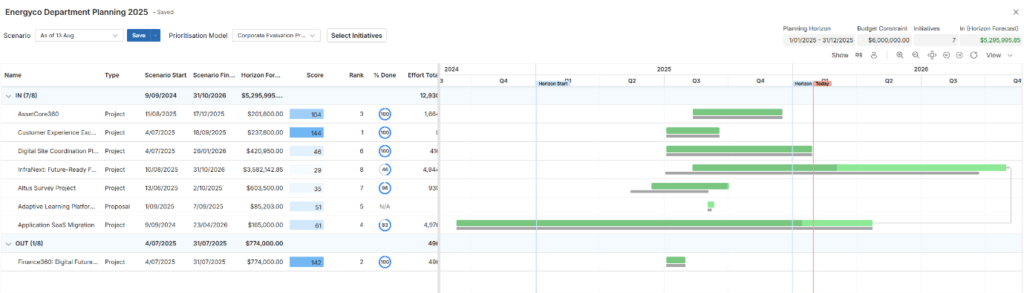
Modern portfolio management software like Altus removes that barrier entirely. Instead of manually rebuilding models, the platform does the heavy lifting: it applies your value rules consistently and visually show you where the issue or gap could be. What once required days of spreadsheet manipulation now happens instantly - but the interface still looks and feels familiar just like you might model it out with a spreadsheet. You adjust a constraint; the system recalculates the optimal portfolio and visually show whether it is possible. You create a new scenario; the software shows its impact side by side with the others so you can easily compare with a previously created scenario. No hassle, no last minute scrambling, no version chaos.
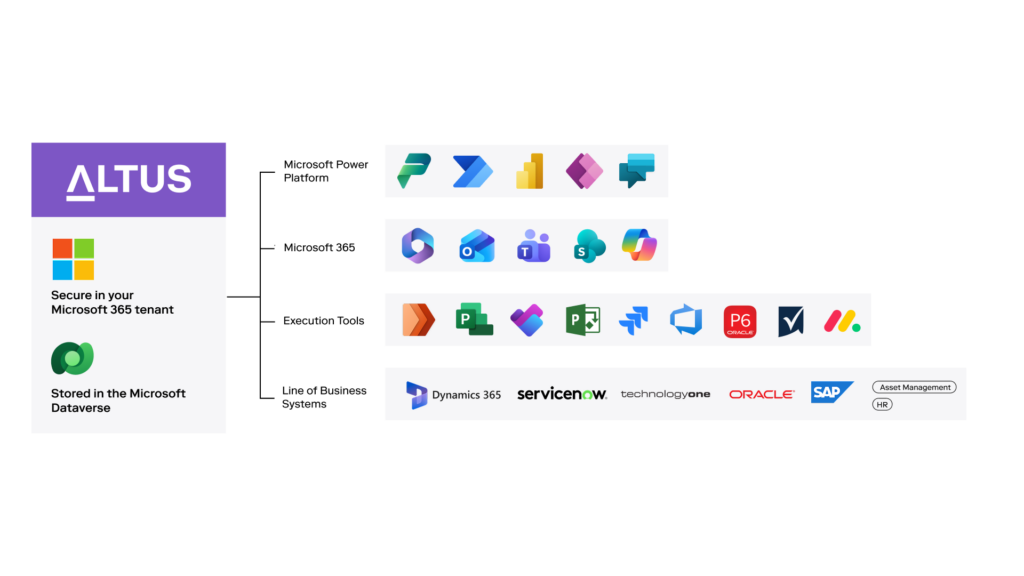
That said, the goal of the scenario planning capability isn't to replace human judgment - it’s to ease the process of both upfront and continuous planning that has created a lot of pain and hassle. When software eliminates the manual work, scenario planning shifts from a once a year spreadsheet chore to a regular strategic exercise
Moving Forward
The question isn't whether your strategic plan will face an unexpected future, it's whether you'll be ready when it does.
Scenario planning isn't about predicting the future perfectly. It's about being prepared for the range of reasonably likely futures, so when one arrives, you can respond with confidence rather than scrambling to coordinate with various teams, pull out spreadsheets hidden in local drives and then rebuild your entire portfolio plan under pressure.
Organisations that navigate change effectively aren't lucky - they're prepared. They've thought through multiple scenarios, understand the trade-offs, and can move from "our situation changed" to "here's how we adjust" in days rather than weeks because they now able to access a set of unified scenario plans within a platform.
Start simple. Next time you build a portfolio plan, ask: "What if our budget gets cut by 20%?" Build that scenario. See what changes. See how long it takes with your current tools. Or try out Altus.pro’s scenario planning capability.
That one exercise will tell you whether your approach to portfolio planning is ready for the multiple futures your organisation will actually face.
Because the future isn't singular. Your planning shouldn't be either.
Ready to unlock project success?
Schedule a demo to find out more about how Altus can help your organisation unlock project management success and reach your strategic goals.